People who have aloe vera plants often hear that they are hard to take care of, but that isn’t really the case.
Just as with any other plant, you just have to know what to do to keep it healthy, but the good news is that an aloe vera needs very little watering, so you won’t have much to do when it comes to keeping it well watered.
That being said, it’s also important for you to learn how to water it, and by this we mean, do you water aloe vera plants from top or bottom?
The answer is very simple.
Aloe can be watered from above onto the potting mix, or from below through drainage holes. Wet the root zone thoroughly, let excess water drain, and allow the mix to dry before watering again. NC State Extension.
Bottom watering is an option, not a requirement; the aim is to moisten the potting mix without leaving roots standing in water.
For top watering, pour slowly onto the soil surface, avoiding water trapped in the leaf rosette.
The Basics of Watering Aloe Vera Plants
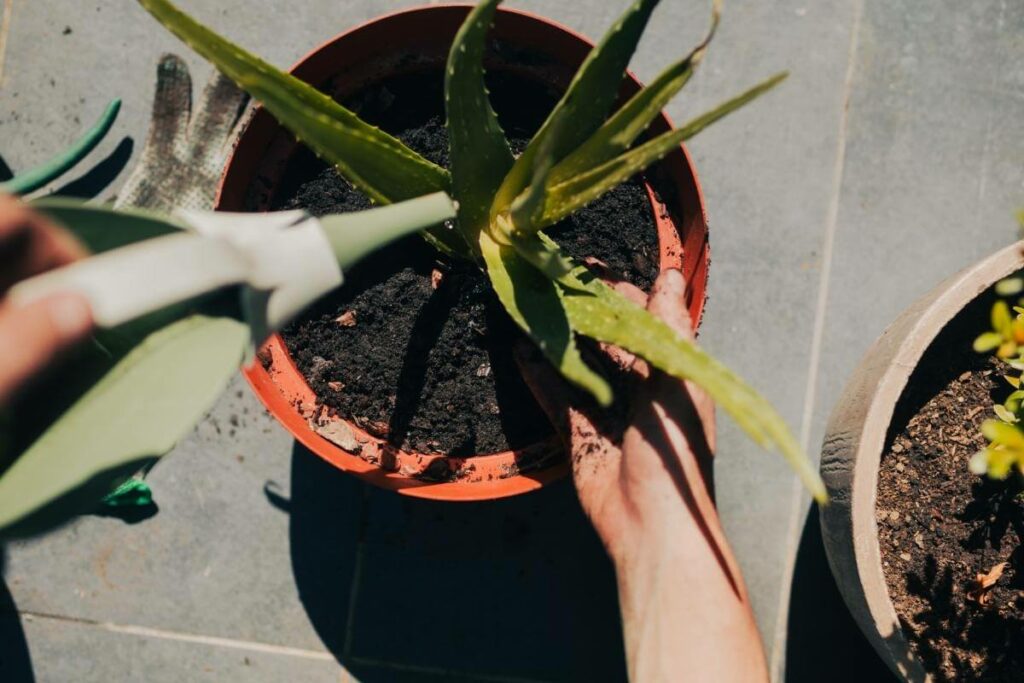
One of the things that you should consider doing for aloe vera plants is using either distilled water or rainwater.
You can use tap water for a while, but the chlorine and fluoride in tap water is not good for aloe vera plants over time.
An occasional watering with tap water is fine, but it’s much healthier for the plant to use distilled or filtered water, or even rainwater when you can.
Apply water to the potting mix, not to the outside wall of the pot.
Pouring Technique
Also, when pouring the water, don’t pour it too fast but instead, use a steady and consistent flow of water.
Keep pouring until you see the water drain out of the bottom of the pot, then stop.
Aim water at the soil surface and let it drain through the pot.
Pouring slowly is a must because this is the only way to ensure you won’t use too much water in the end.
Go Easy: Moisten the root zone, then drain away excess water.
Why does watering the root zone matter?
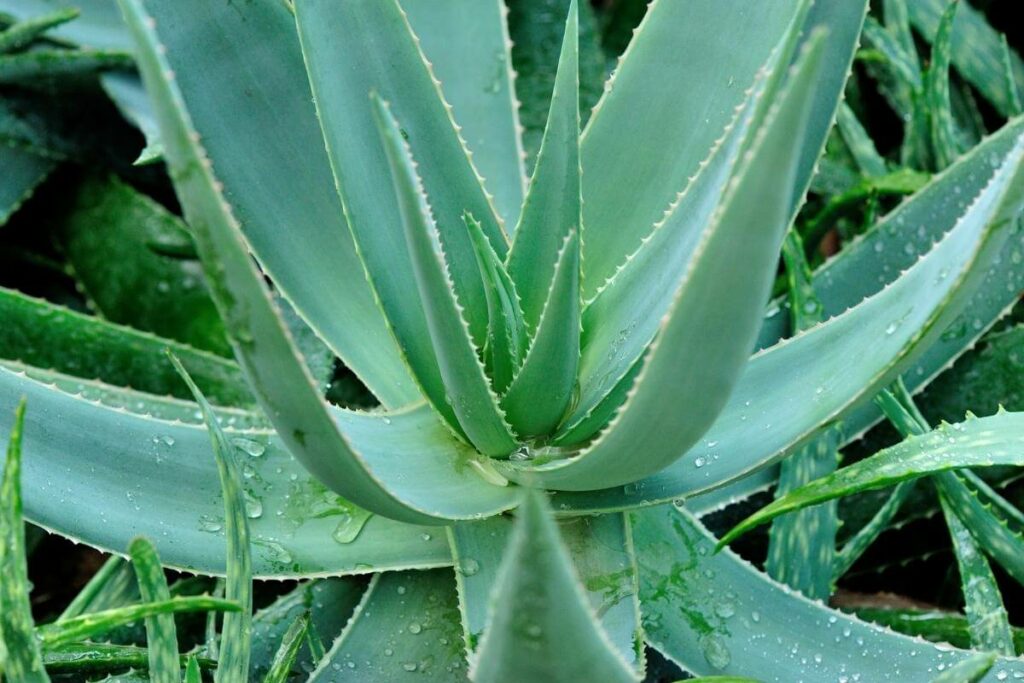
Top watering onto potting mix can wet the roots thoroughly; watering only the leaves cannot.
A wet leaf surface does not show whether the root zone is moist.
Some plants can transfer the water from their leaves to the rest of the plant, but this isn’t true for most plants, including the aloe vera plant.
It’s easy to assume that the plant is getting enough water since the leaves are nice and wet, but just because the leaves are nice and damp doesn’t mean that the roots are.
And when you consider that aloe vera plants can grow to several feet in height, it’s easy to understand why just getting the leaves wet is not going to give the plant the water it needs to survive.
Both methods require drainage and a drying period between waterings.
Check the potting mix rather than judging moisture from the leaves.
Remember This: Let excess water drain away and empty the saucer.
How Much Watering Does an Aloe Vera Need?
Aloe vera plants are succulents, so they retain water in their leaves for a very long time.
As such, they do not need to be watered very often.
How often should you water your aloe vera plant?
Much of the answer depends on where you live and the size of the plant, but most people find that watering their aloe vera every two to three weeks is more than enough to keep it healthy.
Instead of going by a specific time frame, it’s best just to test the soil in the plant to determine how wet it is:
To do this, simply stick your finger in the soil about two to three inches, and if it is damp or moist, there’s no need for more water.
If you reach two to three inches into the soil and it is completely dry, you can go ahead and give it some more water.
While many people water their aloe vera plant every two to three weeks, some people find that it needs once-a-week watering instead.
Nevertheless, testing the soil to make that determination is still the most reliable way to make sure that you aren’t over-watering or even under-watering your plant.
And while most people will over-water an aloe vera plant before under-watering it, it is still possible for you to not give it enough water.
Wilted or sagging leaves can have more than one cause; check soil moisture and root condition before adding water.
Water only when needed, and drain excess water after either method.
Pay Attention: And if the plant has been overwatered, it will have symptoms such as edema (swelling), discolored leaves, leaves that are too soft, mold in the soil, and leaves that sag.
Conclusion
Thorough watering followed by drainage and drying supports healthy aloe roots. NC State Extension.
Aloe vera plants are really easy to take care of and don’t require much maintenance, but you still have to make sure that you take care of it properly for it to survive.