

Publisher’s update, 27 October 2026: Source-cited corrections were prepared with Codex. Specialist human review is pending; the original contributor’s byline is retained.
Fledging is not feeding independence
This guide concerns the American robin. Cornell gives a nestling period of about 13 days; leaving the nest does not mean a youngster can immediately find all its own food. Parents continue caring for fledglings as they develop flying and foraging skills. Do not use age estimates as a home-feeding schedule.
Watch healthy fledglings from a distance and keep pets away. For injury or suspected orphaning, contact a wildlife rehabilitator; do not give food or water unless they direct you.
Sources checked 27 October 2026: Cornell Lab: American robin; BC SPCA: helping baby birds.
Robins are beautiful birds, renowned for their bright red-orange bellies.
The females, as is often the case with birds, are more muted in color.
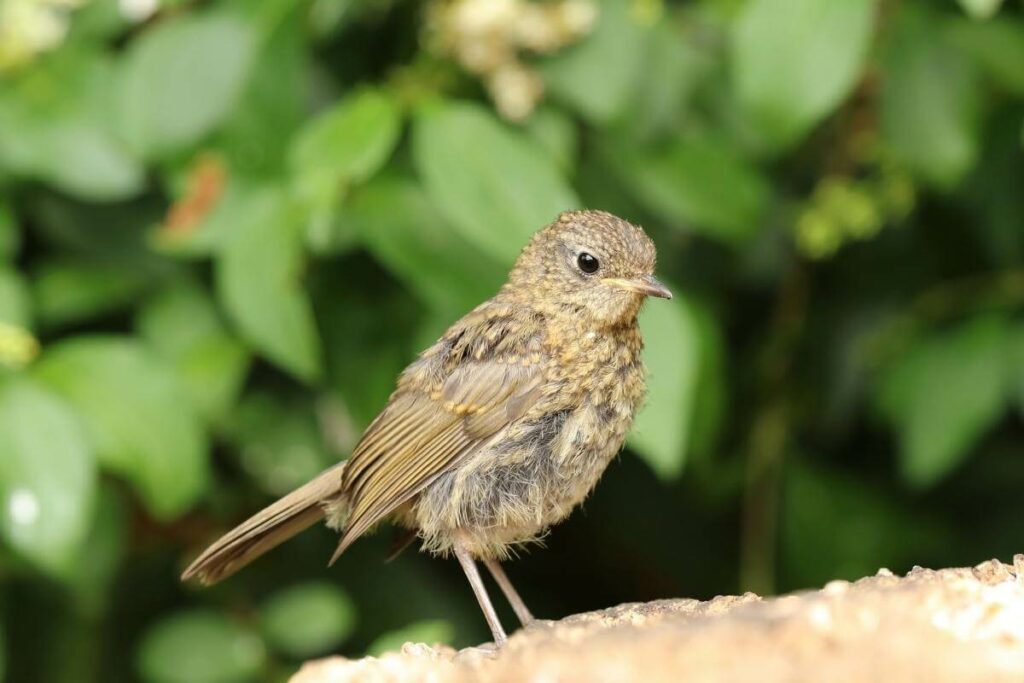
The fledglings are covered in spots, like a fawn, and have a ruffled feather-duster sort of look.
Behavior-wise, robins are quite brave and may forage around people at, say, the park.
Their nests are made primarily of sticks and grass, in a classic bowl-like shape.
Their eggs are super-unique and beloved for their sky-blue color.
What Do Robins Eat?
Robins start life off eating bugs and they continue to eat bugs life-long.
Their favorite bugs are:
- Worms
- Mealworms
- Beetles
Although they are not limited to these.
Rather, they prefer bugs first, and second, fruit.
This means that they are almost always on the hunt.
They feed their young almost solely insects, as these are soft and easy for them to digest.
Their favorite:
- Worms
- Caterpillars
- And other invertebrates
Robin’s beaks are specially designed to snatch them from a leaf or pull them from the dirt, and they make a nutritious and protein-rich snack.
Can Fledglings Feed Themselves?
This means that they will attempt to leave the nest by themselves. You can recognize a robin fledgling by its distinctly spotted, ruffled look.
They fly in brief spurts and are quick to hide from perceived danger! Once baby robins are fledglings, and more mobile, they will begin to hunt (with varying success).
This may still be supplemented by their parents until they are older.