

Windchimes are a great way to add a little bit of serenity to any space.
They’re great for indoors, outdoors, or even in your office!
The trick is to find the best space for them to hang so you can enjoy their relaxing sounds every day.
Whether you’re looking for the perfect spot to hang your wind chimes outdoors or indoors, we’ve compiled a list of great locations that will help you find the best place.
How to Hang Wind Chimes Indoors
There are a couple of options for hanging a single wind chime, but we prefer using a keyhole mount.
This mount is screwed into the wall with one hole and then has an extra attached piece that slides over the top.
The string or chain of your wind chime can be threaded through this loop, and the wind chime can be hung so that it drapes down.
The keyhole mount is best for hanging a small wind chime, such as the 10-inch mermaid.
This way, she will sway carefree in any room, and you’ll enjoy the sight of her silhouette against the wall.
If your desired mounting location has two or more keyhole mounts, you could try hanging your wind chimes in different places.
This will work well if you have ample visual space to fill, such as a great room or open-concept kitchen and living area.
Where to Hang Wind Chimes Indoors
If you’re looking to hang a wind chime indoors, you’ll want to find a spot where the shadows of people passing by won’t hit it.
Placement against a wall or in a corner can help keep your wind chimes safe from collisions and provide some extra stability.
You could also look into placing them near a window where they can catch a breeze and be heard more clearly.
Try hanging them from the ceiling or even on a chandelier if you’d like to get creative.
How to Hang Wind Chimes Outdoors
The best method for hanging a wind chime outdoors involves using a sturdy tree branch or yard post.
This will ensure that no matter how strong the breeze, your wind chimes will stay safely grounded and give you years of enjoyment!
If you don’t have a tree on your property or it doesn’t have branches low enough to reach, you might be able to find a sturdy piece of driftwood or even a tree stump in the yard of one of your neighbors.
But First: Be sure to ask permission before taking anything from their property, and make sure that you clean up after yourself if you use something such as this!
Where to Hang Wind Chimes Outdoors
You’ll want to choose a spot on your patio, porch, deck, or back lawn that receives a lot of sunlight and access to the breeze.
This will ensure that your wind chimes will dry out quickly after a rainstorm and be more audible on a breezy day.
Of course, you can also find a spot that faces into the breeze if this isn’t possible. This is especially true if you want to hang them on a porch or under an eave on your house.
Some people like to hang their wind chimes in trees or on outdoor structures.
If you’re considering this, try placing them at least 15 feet off the ground and near other objects that they can catch on for safety purposes.
Just remember that the sun, wind, and rain will gradually cause your wind chimes to age, and you’ll want to make sure that they’re hung in such a way that they don’t get damaged!
Creative Spots for Windchimes
Need some inspiration?
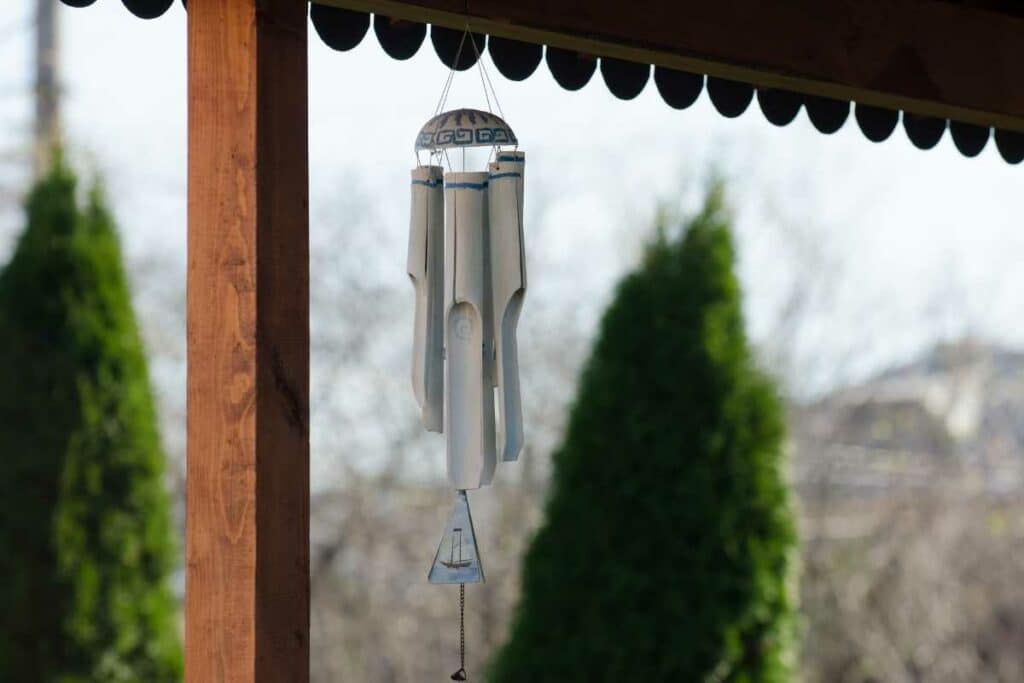
Here is a list of unique places to consider hanging your wind chimes:
- High up on the wall or ceiling
- Outside of your house near windows, doors, or skylights
- Under trees and overhangs
- Near other garden chimes for a unique soundscape
- In your yard over a patio, garden, or pool
- On the porch, deck, or other outdoor living areas
What to Avoid When Hanging Wind Chimes
If you do decide to place your wind chime outdoors, make sure that you avoid placing them near loud objects, such as speakers, televisions, and exhaust fans.
To ensure that animals don’t damage your wind chimes, try to find a high point where they won’t be within reach.
Good News: This will keep squirrels, raccoons, and other wild animals from knocking them down or chewing on them!
Enjoy Your Wind Chimes Inside and Out!
As long as you choose the right spot, your wind chimes will give you years of enjoyment.
Whether they are hanging indoors or outdoors, your wind chimes can be a pleasant addition to any room or garden.
Now that you know where to hang wind chimes inside and out, it’s time to think about your own space.
You will love the soft chiming sounds and the special touches they add to your home and garden.
You May Also Like
- Top 10 Best Wildlife Pond Edging Ideas
- How to Make a Bird Table Pigeon-Proof
- Are There Wild Peacocks in the US?
- What Should I Put in the Bottom of My Wildlife Pond?

- How to Find Pond Leak (Quick Method to Find the Leaks)

- Do Garden Ponds Overflow When It Rains

- How To Fill A Pond With Water (Complete Guide)

- Complete Guide to Farm Ponds

- Pros and Cons of Grass Around a Pool

What Kind of Wind Chimes Do You Want?
Wind chimes come in a variety of styles, sizes, materials, and more.
The sound of your wind chime is greatly impacted by its material, its tubes, and its size.
Here are some common kinds of wind chimes.
Classic
Your classic wind chime is probably the first image that pops in your head when you hear the words “wind chime.”
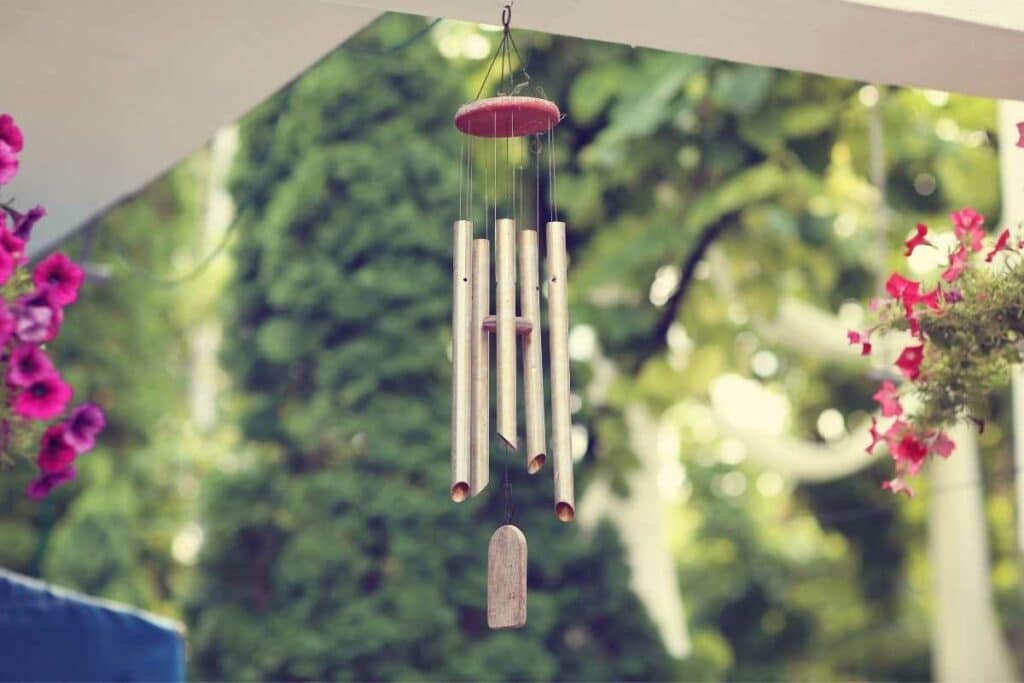
They tend to have metal tubes with a wooden striker and a wooden or metal suspension ring, as well as a wind sail.
Glass
Glass wind chimes are made out of durable glass which is colored and cut into shapes to create a design or image.
Some themes include animals, holidays, and objects. Glass wind chimes create a gentle sound.
Capiz
Capiz shell is a shell from windowpane oysters and has been in use for thousands of years.
It can be dyed and is usually cascaded to create a chandelier effect.
They make very soft sounds and move at the slightest breeze since they are so lightweight.
Do You Want Handmade Wind Chimes?
Handmade wind chimes are very beautiful and possess a charm that store-bought wind chimes often don’t have.
Whether it’s wood that was painstakingly handcarved, glass that was dyed by hand, or capriz that was carefully arranged, there is something special about handmade wind chimes.
Comparing wind chimes of the same size and material, handmade wind chimes tend to be more expensive because of the labor that goes into making them.
Handmade wind chimes can be found online on specialty or market websites, or at flea markets.
What Is Your Budget?
You always have to consider your budget whenever making a purchase.
You may not have the budget for handmade wind chimes or very large ones.
But don’t fret! You can still get very beautiful wind chimes at a low price.
On the other hand, if you have a high budget, you can get large, custom, handmade wind chimes specifically to your liking!
When should you bring bamboo wind chimes inside?
There are certain times of the year when bamboo needs to have protection from the outside elements, depending on what climate you live in.
Although bamboo is a very durable material, it can become susceptible to cracks, grime, mold, and breakages in harsh winter weather or extreme heat.
This is because the bamboo will expand and contract as it comes into contact with extreme weather changes.
Therefore, you should bring bamboo wind chimes inside during extreme winter weather or for the entirety of the winter season so that they’re protected from harsh conditions that could make them crack and break.
How do you clean dirt and grime off of bamboo wind chimes?
When cleaning bamboo wind chimes, one of the most important jobs you’ll have is to regularly wipe off the dirt and grime that collects on them.
It’s simple enough to do this part of the job since you can wipe down bamboo with a damp cloth to remove dirt.
Just make sure to be gentle when you wipe off the dirt and grime so that you don’t damage the surface or cause any other problems with your wind chimes.
Apply a coat of varnish in the spring.
Learn how to choose the right wind chime for your home or garden. Read our latest article here.
How do you varnish bamboo wind chimes?
Another way that you can protect your bamboo wind chimes so that they last longer is to apply a varnish to them after cleaning and drying them.
Applying varnish will seal in the bamboo’s surface and protect it from mold and dirt that would otherwise get caught in its grains.
Varnish also makes the surface less susceptible to extreme and harsh weather conditions, such as high heat and ice/snow.
Japanese Wind Chime Meaning Explained
What Are Japanese Wind Chimes?
Japanese wind chimes (furin) are distinct from wind chimes traditionally found in other countries.
In the West, wind chimes are usually collections of different glass, metal, bamboo, or wooden shapes that hang from a string and make music when they blow in the wind.
Now, Japanese wind chimes aren’t all that different since they also make music when they blow in the wind.
However, they serve a slightly different purpose, and they have a special meaning to them.
The Japanese wind chime consists of a blown-glass bowl that has a picture painted inside and gets turned upside down.
This piece hangs at the top of the chime, while a longer paper strip dangles beneath it at the bottom of the chime.
The bowl also contains the zetsu (clapper), which creates the sound inside of the bowl.
And when the wind blows against the paper strip (called the tanzaku), it triggers the string to move the zetsu, which creates the music.
Japanese wind chimes can come in many variations of colors and decorative designs, depending on where you acquire them.
What Does the Word “Furin” (Wind Chime) Mean?
Furin – the Japanese word for “wind chime” – translates to something like “wind bell”, which isn’t far off since the dome at the top contains a clapper.
In this word, “fu” translates to “wind”, while “rin” translates to “bell” in Japanese.
When it comes to the glass bell wind chimes, specifically, these are referred to as “Edo Furin”. “Edo” refers to a part of Tokyo, Japan.