
Of all the pests that you might get in your home or even outside in your garden, slugs are not exactly the scariest or the most dangerous, but slugs can certainly be annoying.
In fact, it can be a huge inconvenience if slugs get into your home, so the first thing that you should do is try to get rid of slugs, so they don’t come back.
While it may take a professional exterminator to accomplish this, you can help keep them at bay simply by learning a little more about them.
If you’re wondering, where do slugs come from, the simple answer is that they love moist plant debris, which includes low weeds, mulch, fallen logs, and underneath rocks. These are some of the places where they love to hide, mostly because they love the moisture those places provide. If a food source is near where the moist debris is, they’ll be even more attracted to the area.
Slugs are a form of snail that along the way lose their shells, and both snails and slugs love to eat plant leaves, fruits, and flowers, especially if these things are located near the ground.
What Is The Difference Between a Slug and Snails?
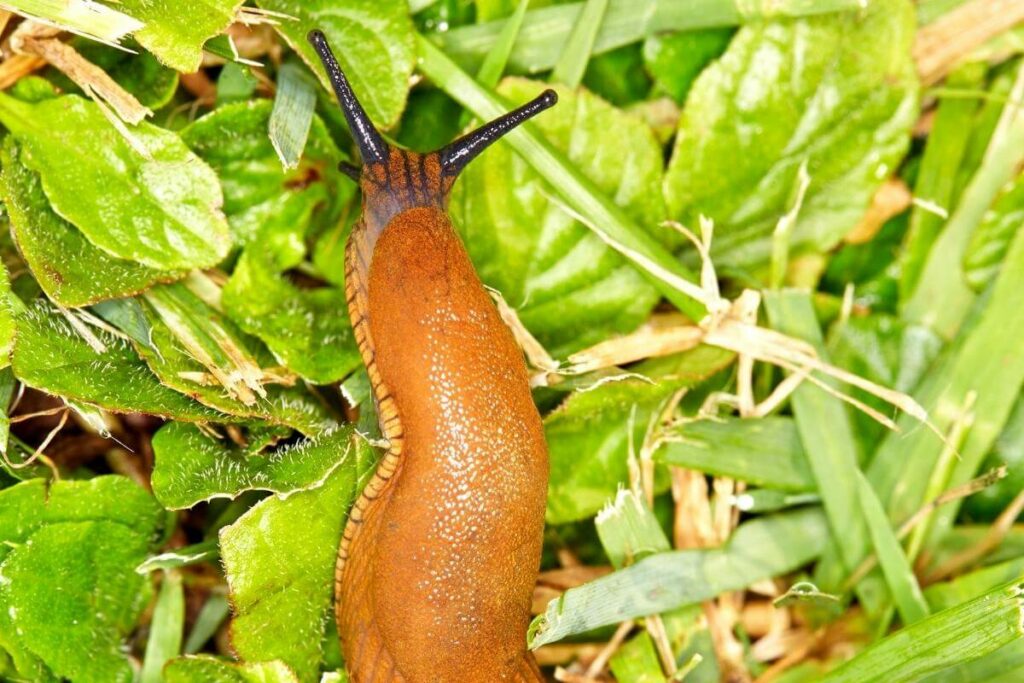
The main difference between slugs and snails is that snails have a shell that they can withdraw inside of when they want to.
Both slugs and snails are soft-bodied animals, and slugs no longer have their shells.
There are many different species of slugs, but most of them get to around 25mm to 100mm (roughly 1 to 4 inches) in length once they become adults.
Fortunately, slugs cannot harm people, but that isn’t the case with plants.
In fact, slugs are very destructive to any type of plants in flower beds and gardens.
Slugs can eat huge holes in your leaves, and they are especially attracted to eating strawberries, lettuce, and violets.
Sometimes you might not see the actual slugs, but you’ll certainly notice their slimy trails, which can hang around for several days.
Have You Noticed: You might also know that they’re there because of the damages you find to your leaves and flowers.
Less-knows Facts about Slugs
During the day, slugs usually hide in very damp places, including under stones and logs, and even underground.
If you have a low deck or a planter placed somewhere, you might find them there as well.
This is what they do during the day, and at night they come out to eat, making a slimy trail along the way.
Slugs love plant leaves most, but they will eat other vegetation as well.
Slugs lay their eggs in the spring and summer, then put those eggs somewhere that is damp and hidden from the world.
After just a few days, their eggs will hatch, with the immature creatures developing into adulthood in just a few months.
Did You Know: Slugs, along with snails, can live for several years.
How to Prevent Slugs?
Slugs can be found anywhere, but since they only come out to eat and the rest of the time hide in damp places, it is those damp places that you need to eliminate.

Here are a few tips you can follow when you want slugs to leave you alone:
- Place your flower pots and planters on either stands or plant racks.
- Place firewood off of the ground.
- Move your firewood piles away from your home.
- Remove any stones or lumber sitting in your yard.
- Make sure that your crawl space door is nice and secure. Keep the vents open so that it is a little less damp.
- Make sure that all of your home’s exterior doors close all the way.
- If you’re missing any door sweeps or weather stripping, make sure to replace them.
- Consider using a dehumidifier in your basement since basements are frequently damp.
Remember that they love damp and moist places, so the fewer places you provide to them that are moist and damp, the less likely you’ll see slugs anywhere in your garden or even in your home.
Do Slugs Cause Damage?
Slugs can cause some damage to fruits, flowers, and plants as they end up eating away and making holes in them.
Most of the time, the slug damage is just cosmetic, as it doesn’t seem to hurt the plants. People still don’t like the pests and would like to control them out of their areas.
This article will be key to helping you remove these pests.
In What Way Can You Find Slugs?
Slugs at Night
Since slugs only come out at night, you can always go outside after dark and inspect your property to see where they are coming from.
This is because slugs live away from direct sunlight where there is plenty of moisture.
Slugs in Soil
Slugs can come from any damp, moist place, and if you have more than one place in your yard that is damp and moist, you may have to do some detective work to determine exactly where slugs are when they hide.
Slugs also lay their eggs in moist soil or compost.
What Should You Do to Get Rid of Slugs?
Besides the things mentioned earlier, you can also call an exterminator to help you with slug control.
Getting rid of slugs doesn’t happen overnight; instead, it’s a process.
This means that the exterminator may have to come back more than once to get rid of your slugs.
Hire Professionals: But it’ll be worth it in the end because they have the tools and equipment to make sure you get a slug-free home.
Slugs In Summary
If you see nice round holes in your vegetable plants or leaves, especially if you see a silvery, slimy trail nearby, you likely have slugs.
At night, you’ll be able to determine which damp, moist area they may be coming from.
Slugs love natural dark areas with some soil and water around them. These are the places you will find them.
Also Helpful
- Are Scale Insects Harmful to Humans?
- Black Swallowtail Male vs Female – How Do You Tell?
- I Have a Hedgehog in My Garden, What Do I Do?
Do Slugs Have Backbones?
Silvery Slime Trail You See on Your Patio after Rain Is Essential to a Slugs Survival
Slugs have extremely high water content and due to the absence of a shell are reliant on continuingly protecting themselves from desiccation with the mucus they generate which consists of water and mineral salts.
Attract Slugs and Hand-pick Them
The most obvious method of dealing with slugs is to simply remove them when you see them.
The job can be made easier by attracting them to a specific area, so you can grab many at once.
Target Slug Hiding Places
Because slugs need moisture, they will tend to hide out in dark and damp locations in your garden until the evening.
Do Slugs Bite? Do They Have Teeth?
A Quick Look at the Inside of a Slugs Mouth
For most people, the consideration of how slugs eat probably does not go beyond the sight of some nibbled lettuce leaves or disappearing seedlings.
Despite having a soft gelatinous body, slugs have a jaw and thousands of teeth.
They do most of the eating with a flexible band called a radula that is lined with rows of thousands of tiny teeth. The word “radula” is Latin for “little scraper”
The radula is a common anatomical structure in all gastropods and like a tongue, it can move food from the front to the back of the mouth.
The radula works like a rasp, scraping off and breaking the food into particles for easy digestion.
The Natural History Museum has some outstandingly detailed electron micrograph images of rows upon rows of fang-like slug teeth!
Handpick Slugs Whenever and Wherever You See Them
You can head down to your garden or allotment at dusk to look for slugs that are emerging for a night of feeding.