
In this expanded guide: Do not pour motor oil or bleach into garden soil · Bleach, standing trees and roots: do not use · Copper nails: evidence limits and removal choices.
Publisher’s update, 27 October 2026: Source-cited corrections were prepared with Codex. Specialist human review is pending; the original contributor’s byline is retained.
Choose a stump-removal plan without contaminating the garden
First distinguish a cut stump from a standing tree. Have a qualified arborist assess a standing or unstable tree; do not try to poison it. For a stump, consider size, regrowth, access, nearby roots and buried services before any digging or grinding. Arrange utility locating where required.
Compare digging a small stump, professional grinding and leaving a suitably placed stump to decay. Grinding reduces the exposed wood without removing the entire root system; decay takes time and varies with species and conditions. Discuss soil restoration, settling and replanting with the contractor. Avoid creating a trip hazard.
Sources checked 27 October 2026: Iowa State Extension: removing stumps; University of Minnesota: tree professionals.
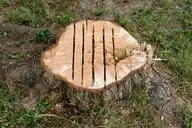
There are different methods you can use to kill a tree stump.
People have different reasons for cutting a tree; some do it for timber, clearing land for building, or reducing the risk of falling branches or trees in our homes.
At the end of it all, there is a tree stump left in our backyard, creating an unpleasant look or taking up space.
However, if the job seems complicated, you can always hire a professional to take care of the stump for you.
Dig the tree stump out
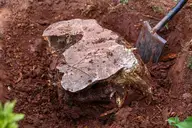
The first and most straightforward method to kill a tree stump is to dig it out.
However, it is not always as easy as it sounds.
Small tree stumps are easy to dig out, unlike large tree stumps.
However, this could be pretty tiresome for large tree stumps, and you might require an extra hand to aid you.
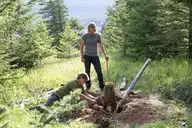
For large tree stumps, we recommend you consider hiring an expert with adequate skills and equipment to do the job for you.
This will not only save you time, but it is also significantly safer. Also, if you try doing it yourself, you can damage your garden.
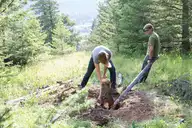
While this method is excellent at removing bulky tree stumps, it is more intrusive than other methods; it takes more time, elbow grease, and powerful tools.
Key Takeaway: The good thing is that you are left with a clean slate that is open to any landscaping ideas. However, you are left with a large hole that you have to fill in.
Grinding the tree stump
Grinding is another effective method; however, it will require a grinder machine.
This is one of the quickest methods of killing a tree stump.
You can choose to hire a specialist since it requires a bit of effort and some technical skills.
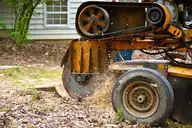
However, operating a grinder can be dangerous to you and the people nearby, mainly due to flying chips and rocks.
However, it comes with its pros and cons.
For instance, it is less intensive than digging it out, and it is also more efficient and requires less effort.
Additionally, you can use the woodchips in your garden as mulch. However, it is more expensive and requires specialized tools and skills.
Do not pour motor oil or bleach into garden soil
Do not use motor oil on a stump
Do not pour new or used motor oil onto a stump, roots or soil. Used oil persists and can contaminate soil and water; take it to an appropriate collection or recycling facility. For removal, choose the mechanical or natural-decay options above rather than an oil treatment.
Sources checked 27 October 2026: EPA: managing used oil.
When Should I Call For Help?
Small tree stumps are easy to remove, but it can be pretty challenging for multiple stumps or a large stump in your compound.
As such you should seek professional assistance to do the job for you.
If you have worked on the tree stumps for several months with no results, you can contact a professional to try alternative methods.
Bleach, standing trees and roots: do not use
Do not use bleach on trees, roots or stumps
Do not pour household bleach onto a tree, stump or soil. It is not a suitable garden stump-removal treatment and can damage surrounding vegetation and soil. Do not substitute a household chemical mixture or an unapproved herbicide. Standing trees require a qualified arborist’s plan; cut stumps can be dug, professionally ground or left to decay where appropriate.
Sources checked 27 October 2026: Penn State Extension: avoid bleach on vegetation; Iowa State Extension: stump options.
Copper nails: evidence limits and removal choices
Copper nails are not a dependable removal plan
Driving nails into a stump does not remove the wood or establish that roots will die. We do not recommend it, offer a nail count or promise a poisoning effect. Metal left in wood can also complicate later cutting or grinding. Tell the contractor about any existing nails and choose a suitable removal method.
Sources checked 27 October 2026: Iowa State Extension: stump removal methods.
So, Do Copper Nails Kill Tree Stumps?
Therefore, the claim that a single copper nail can kill tree stumps is far-fetched.
Exclude burning and salt treatments
Do not soak a stump in fuel, ignite underground roots or add salt or Epsom salt as a removal recipe. These approaches introduce fire or soil risks and are not part of this guide. Choose a practical removal or decay plan and allow for repeat assessment if the stump regrows.
Sources checked 27 October 2026: Iowa State Extension: stump removal precautions.